
I'm sure that many friends who have used rubber products have noticed that after using them for a while, the surface of the products will turn "pale". Do those with obsessive-compulsive tendencies towards product appearance feel particularly troubled? Today, Yongyong Silicone Rubber will deeply reveal the true mystery of rubber turning pale.
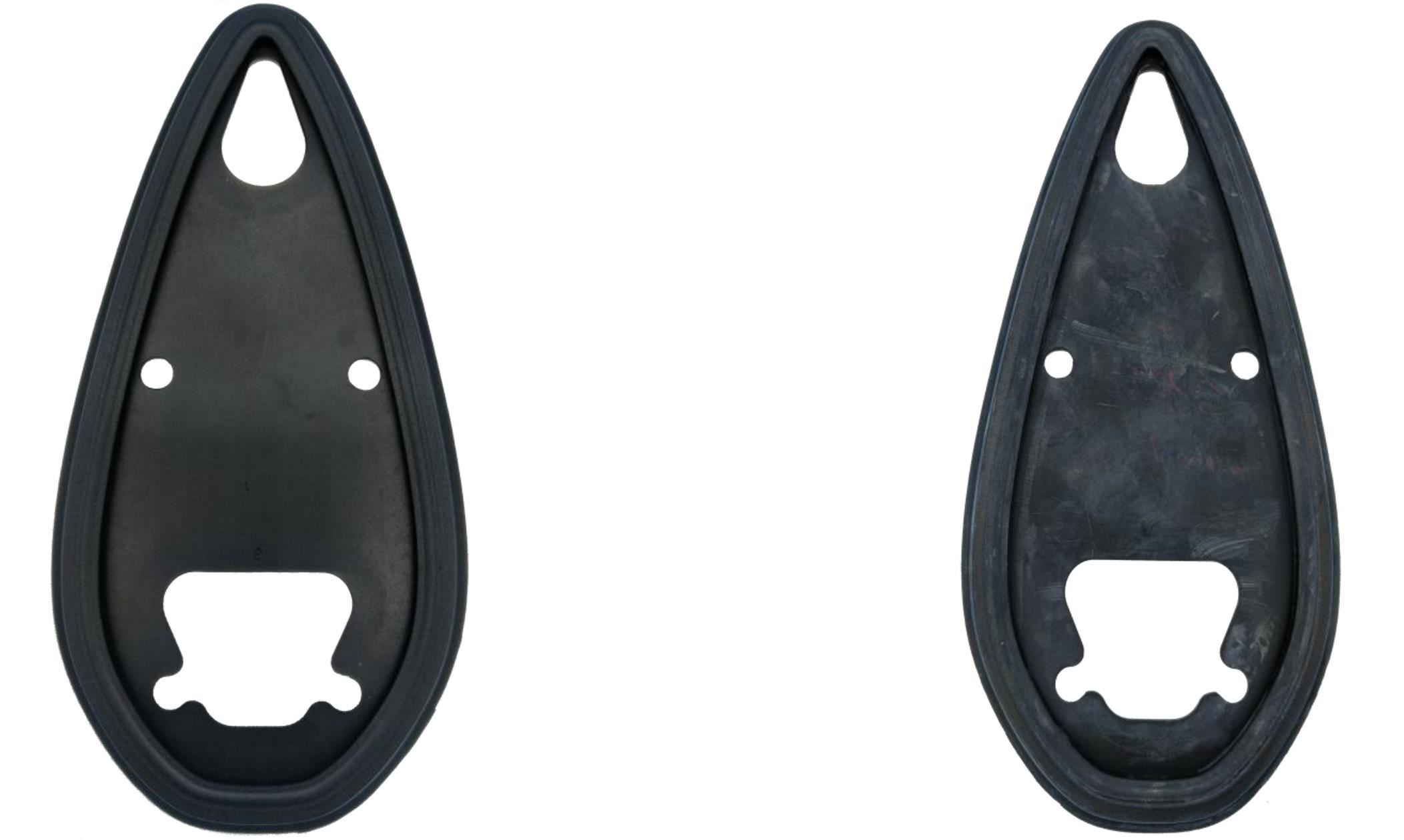
"Rubber turning white" is also known as "spraying of frost". Rubber can be divided into two types: unvulcanized rubber (referred to as "rubber base") and vulcanized rubber (referred to as "products"). The spraying of frost includes spraying of frost on the surface of the rubber base and the surface of the products. Spraying of frost (bloom) is the manifestation of liquid or solid additives moving from the interior of the rubber to its surface. It can be seen that when the additives in the rubber's interior are separated, spraying of frost occurs. In summary, the ways of rubber spraying of frost can be classified into three main types. They are powder spraying, wax spraying, and oil spraying (also known as seepage). Powder spraying is when powder-like additives such as vulcanizing agents, accelerators, activators, antioxidants, and fillers are separated from the interior of the rubber and form a layer of powder. Wax spraying is when wax-like substances such as beeswax and paraffin are separated from the surface of the rubber and form a layer of wax film. Oil spraying is when liquid additives such as softening agents, adhesion enhancers, lubricants, and plasticizers are separated from the surface of the rubber and form a layer of oily substance. In practice, the way of rubber spraying of frost sometimes appears in one form, and sometimes it appears in two or three forms together.
The above describes the several changes that occur to rubber products from the finished product to the stage of turning white. Now, let's explain to you the main factors that cause the product to turn white.
1. Incomplete formulation planning: Excessive release: Common in sulfur, accelerators, activators, and anti-aging agents. Migration release: Common in processing additives and migratory anti-aging agents. Antistatic agent generation: Common in the reaction products formed by the combined reaction of accelerators in the sulfur vulcanization system. Reaction retention: Common in organic peroxide vulcanization systems with excessive low-molecular substances. Stress release: Common in inorganic fillers, such as calcium carbonate.
2. Inadequate technical operation: Inhomogeneous mixing results in poor dispersion, with some exceeding the fullness standard. The vulcanization temperature is too high, causing an excessive amount of the reinforcing agent. The weighing is inaccurate (overweight, underweight, omission, or incorrect weighing). The vulcanization temperature is too high, leading to spray frost due to polymer degradation. The vulcanization temperature is too low, resulting in incomplete reaction and thus the occurrence of under-sulfurized spray frost. The vulcanization time is insufficient, causing the rubber surface to appear whitish due to improper operation of the release agent or mold cleaning water spraying.
3. The quality of raw materials can fluctuate due to differences in the origin of the raw materials, the manufacturing method, the technology, and the batch size. The raw materials themselves vary greatly. The composition technology of the raw rubber: the polymerization temperature, the catalyst, the constituent monomers, etc., lead to differences in solubility. The purity, moisture content, ash content, pH value, and physical properties all change.
4. Storage conditions - Temperature: The solubility of the additive in the rubber usually increases or decreases with the rise or fall of temperature. (Pressure and humidity): The pressure applied to the rubber during storage, the humidity of the surrounding air, and the time all have an impact on the solubility of the additive. Generally, the impact is not significant. However, if the pressure is high, the additive in the compressed part of the rubber will form crystal nuclei, protruding from the surface of the rubber, resulting in frosting; if the humidity of the air is too high, the polar additives in the rubber will weaken their effect on the raw rubber (non-polar), reducing the solubility of the additive, and then causing frosting; the longer the storage time, the more obvious the frosting on the rubber surface becomes, because the temperature and humidity of the air in the storage environment change with the seasons and vary greatly, easily causing changes in the solubility of the additive, and then leading to frosting.
5. Rubber aging: Most cases of rubber aging cause damage to the intact and balanced network structure of vulcanized rubber, and also disrupt the chemical or physical bonds between various additives in the rubber system and the raw rubber molecules, as well as between the additives themselves. This reduces the solubility of the additives in the rubber system. As a result, those additives that are in an over-moistened state will separate from the rubber and form flaking.
After the above introduction, do you think the friends will have a new understanding of the whitening phenomenon of rubber products? Yongyong Silicone Rubber has been dedicated to silicone rubber products for 23 years. If you want to know more information, you can visit our company's website www.seidai88.com. The contact number is 0769-85536776. The contact person is Miss Liu.


