
There are many different types of raw materials in rubber products, but they are all divided into two main categories:
Natural rubber (plant latex) and synthetic rubber (manufactured by chemical plants or laboratories).
In the commercial field, the most important synthetic rubber is styrene butadiene (SBR), polyacrylic and polyvinyl acetate (PVA);
Other types include polyvinyl chloride (PVC), polychloroprene (commonly known as chloroprene rubber) and various types of polyurethane.
Although natural rubber and synthetic rubber are similar in some aspects, they are manufactured through completely different processes and chemically different.
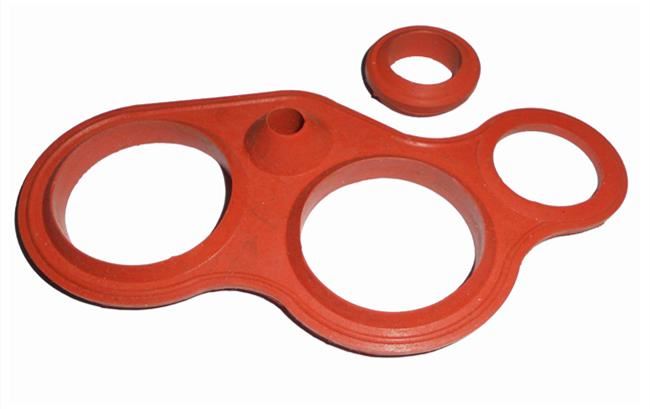
Natural rubber
Natural rubber is made from a flowing, milky white liquid called latex. When you cut into certain plants, they secrete this latex.
For example, common dandelions produce latex; if you break off their stems, you can see the latex dripping off them.
Theoretically, there is no reason why we cannot produce rubber by growing dandelions, although there are 200 different plants in the world that can be used to produce latex, but over 99% of the world's natural rubber is made from the latex of a tree species called the rubber tree (Hevea brasiliensis).
This latex is approximately one-third water and one-third rubber particles, and this form is called a colloidal suspension. Natural rubber is a polymer of isoprene (also known as 2-methyl-1,3-butadiene), with the chemical formula (C5H8)n.
More simply, it is formed by the loose connection of thousands of basic C5H8 units (isoprene monomers) into long and entangled chains.
These molecular chains can be quite easily stretched, but if you release them, they will spring back directly - this is the reason for the elasticity of rubber.
Synthetic rubber
Synthetic rubber is produced in chemical factories by refining petrochemical products.
The first and most famous one is: Chloroprene rubber (the trade name of polychloroprene), which is made by reacting acetylene and hydrochloric acid.
Another type of synthetic rubber: Emulsion styrene-butadiene rubber (E-SBR) is widely used in the manufacture of vehicle tires.
This article mainly focuses on natural rubber.
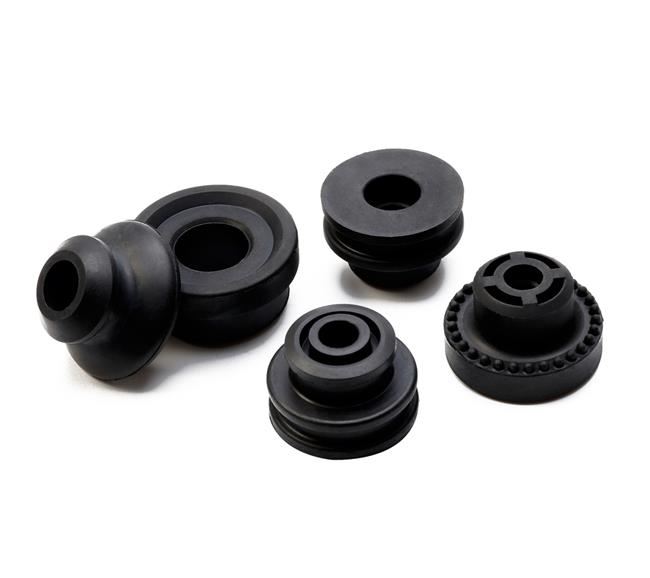
How is rubber made?
Producing rubber products from natural rubber involves several different steps.
1. First, a traditional process called "rubber threading" must be used to collect latex from the rubber tree. This involves making wide V-shaped cuts in the tree's bark. When the latex drips out, it is collected in a cup.
2. Then, the latex from many trees is filtered, washed, and reacts with an acid to cause the rubber particles to coagulate (stick together). This rubber is then pressed into thick or thin sheets and dried to prepare for the next stage of production.
Additionally, when it cools, it tends to become cold, smelly, sticky, and viscous.
Next, further processing is carried out to turn it into a more versatile material.
3. First, a mechanical process called a "chewing machine" is used. Using mechanical rollers and pressure, the raw rubber is "chewed" to make it softer, easier to handle, and more adhesive. After the rubber has been plasticized, additional chemical components are mixed in to improve its properties (for example, to make it more wear-resistant).
4. Next, the rubber is flattened by rollers (called the "rolling process") or shaped through special-shaped holes to form hollow tubes (a process called extrusion).
5. Finally, the rubber is vulcanized (boiled): sulfur is added and the rubber is heated to approximately 140°C (280°F) in a pressure cooker (an industrial pressure cooker).
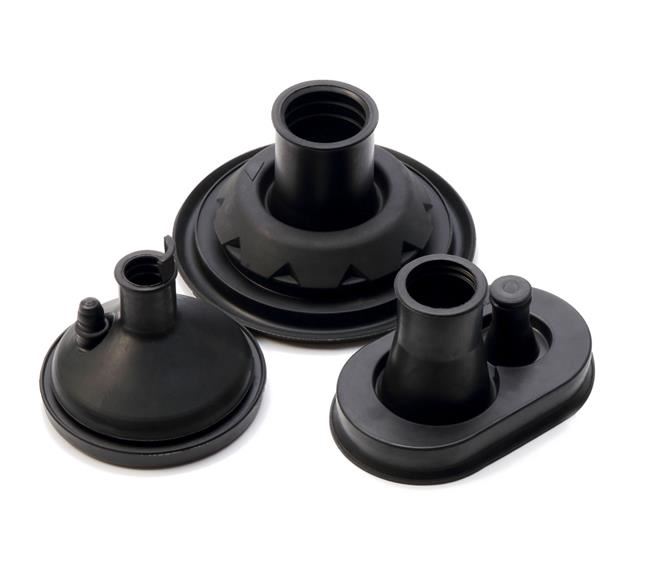
Where is rubber produced?
The rubber tree, Hevea brasiliensis, as its name suggests, originally came from Brazil and was later introduced to countries in the Far East, such as Malaysia, Indonesia, Myanmar, Cambodia, China and Vietnam.
During World War II, when military demand was huge, the supply of natural rubber in these countries was cut off, which accelerated the development of synthetic rubber, especially in Germany and the United States.
Today, most natural rubber still comes from the Far East, while Russia and its former Soviet republics, France, Germany and the United States are the world's leading producers of synthetic rubber.
The largest single source of latex rubber in the world is the Harbel rubber plantation near Monrovia, Liberia, which was established by Firestone Tire Company in the 1920s and 1930s.
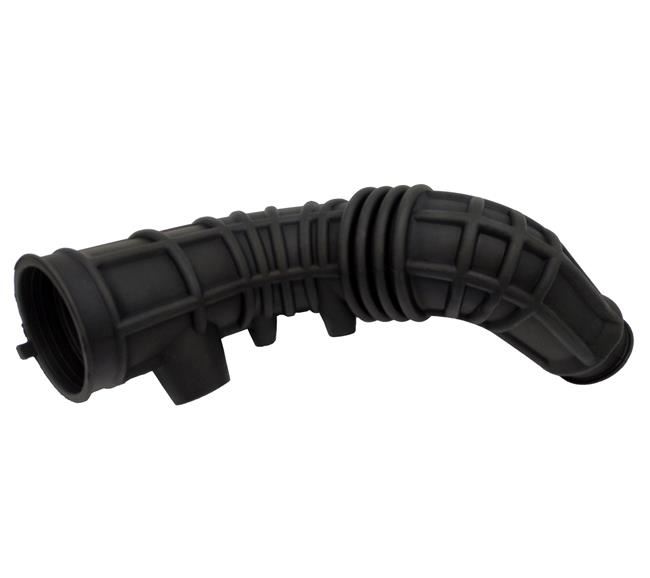
What can rubber be used for?
The physical and chemical properties of the material determine its application. Even if you have no idea about the real uses of rubber, you can still make some reasonable guesses.
For example, everyone knows that rubber is strong, elastic, durable and waterproof, so it can be thought to be used in waterproof clothing.
There are many rubber products, but the most important use of rubber is for car tires; approximately half of the rubber in the world is eventually wound around the wheels of cars, bicycles and trucks!
Due to its high impermeability to gases, tires can maintain a pressurized state for a long time.
Rubber can not only become soft but also hard. It is precisely because of these characteristics that greatly expands the range of its use.
Soft and elastic latex is used in various daily items, from erasers, balloons, protective gloves, adhesives to paints.
Hard rubber can be used to make shock-absorbing cushions and inflatable boats.
Because rubber is strong, flexible, and has poor thermal and electrical conductivity, it is also often used as cables.
In addition, its application range is very wide: from artificial hearts to waterproof gaskets for washing machine doors, you will find its various applications!
Chloroprene rubber is one of the most well-known rubbers, but it has far more applications than most people know. It is not only frequently used in medicine, but also widely used as building materials, such as roof and floor sealants, due to its flexibility and waterproof property.
Although there is a huge demand for new rubber in the world, we also produce a large amount of rubber waste, especially discarded car tires.
According to the Rubber Manufacturers Association, in 2011 alone, the United States produced nearly 270 million used rubber car tires, accounting for approximately one-third of the global tire usage.
Although some of them are used to make floors for children's playgrounds, more than half of them are wasted (either burned as fuel or buried in landfills).
Here, the editor would like to remind everyone that although rubber is good, we should also pay attention to environmental protection!
A Brief History of Rubber
1492: Long before Columbus discovered the American continent, the Indians living in Central and South America had already learned how to use the latex from rubber trees to make waterproof clothes and shoes. They called the rubber tree "cahuchu" (weeping wood), which is why French rubber is still called natural rubber today (pronounced "cow-chew").
1731: During an expedition in South America, French explorer Charles Marie de La Condamine sent rubber samples back to Europe, sparking intense scientific interest.
1770: The discoverer of oxygen, British scientist Joseph Priestley, found that he could use rubber sheets to erase pencil marks on paper. In England, erasers are still widely called "rubber" today.
1791: The British Samuel Peal developed a method for making waterproof fabric using rubber solution.
1818: Scottish medical student James Syme used rubber-coated fabric to make raincoats.
1839: American inventor Charles Goodyear accidentally discovered how to vulcanize rubber after throwing a material (treated with sulfur) into a hot furnace.
1876: British explorer Sir Henry Wickham smuggled thousands of seeds from the rubber tree Hevea brasiliensis in Brazil and returned to England.
The British planted the seeds in Kew Gardens outside London and exported them to various countries in Asia, establishing huge plantations that now supply most of the rubber in the world.
1877: American rubber manufacturer Chapman Mitchell developed the first process for recycling rubber.
1882: John Boyd Dunlop invented pneumatic (inflatable) rubber tires, and the demand for rubber began to increase dramatically.
1930: The American chemical team led by chemist Wallace Carothers of DuPont Company developed a revolutionary synthetic rubber called polybutadiene and sold it in the form of chloroprene. (Shortly after, the same team developed a more revolutionary material: nylon)
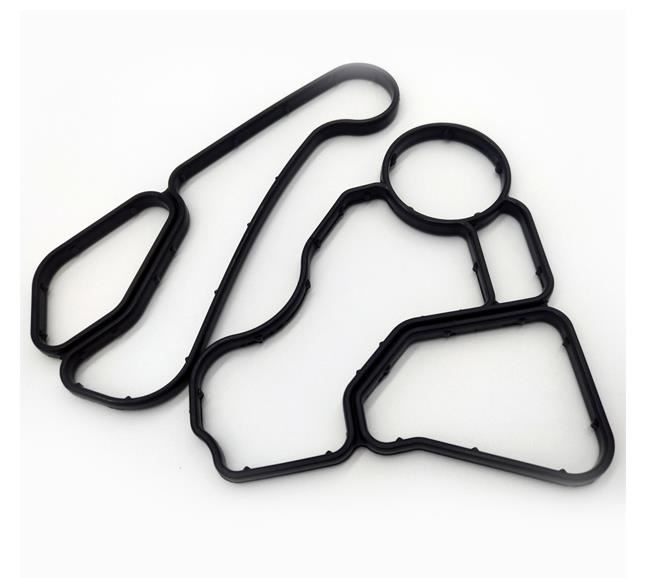
Yongyong Silicone Rubber has been dedicated to rubber products for 25 years. We offer a complete solution covering material research, mold development, and manufacturing of silicone rubber products. Welcome to visit our factory for inspection. Contact number: 0769-85536776 / Miss Luo. Website: www.seidai88.com.


